Kurzweil Enhances K2000 & K2500 with Software Add-Ons

Cerritos, CA. Kurzweil Music Systems is working to keep its popular K2000 and K2500 MIDI keyboards up to date and competitive. Recent software releases look like good value for anyone wanting to expand the capabilities of one of these instruments.

The most recent addition is version 3.5 operating system for the K2000. The updated OS adds 7 additional drum channels (with optional P-RAM), SCSI-2 device support, improved memory management to eliminate “malloc” errors, support for many new CD-ROM drives, improved compatibility with Iomega Zip™ and Jaz™ drives, an alternate sustain pedal function, and MIDI type-1 file import capability.

The Power Tools CD-ROM, priced at $199 (US) contains all of the libraries Kurzweil originally issued on floppy disk, including samples, programs, and demo sequences; as well as lots of new demo sequences and samples from the libraries of several third-party developers. Rounding things out, there is a large selection of new samples and V.A.S.T. synthesis programs.

The K2000 Program Farm Disk, $20 (US), contains hundreds of programs for the K2000 series, including many of the new factory programs from the K2500 ROM’s. And the K2500 GM Disk, also $20 (US), offers a General MIDI set for the K2500 on two disks.

“We are fully committed to supporting our customers on a long term basis, and protecting their investment,” commented Mike Papa, Kurzweil Professional Products V-P, Sales and Marketing. “When you buy a Kurzweil, you can be sure that it will not become obsolete next year.”
Live Audio Conferencing Will Become a Reality With OnLive’s Talker

Cupertino, CA. Everyone talks a lot about video conferencing on the net. And let’s face it, it doesn’t work… yet. But audio conferencing might just get somewhere, even with the Internet’s current bandwidth constraints. And if it does work, it looks like a natural for audio manufacturers and services that want to provide customer support via the web (editor’s note: for that matter, it might be a good thing to have in place here at AudioWorld!).

OnLive Technologies Inc. think they can do the trick. The company is about to announce a new audio conferencing server and browser plug-in technology that will make real-time, multi-person audio conversations possible over the Internet. Web surfers will use the OnLive Talker™ plug-in to log in at chat rooms where they can talk with other users in their own voices. Chat rooms can be set up at any web site, but they will require OnLive’s server software.

OnLive is already hosting six online forums at its web site, where users can test out the software. Beta versions of the client software are available for free download at the site. TThe OnLive server will will be available in December, according to the company. The system requires a Pentium multimedia PC with a SoundBlaster 16 or compatible 16-bit sound card with Windows 95 driver. And a mic and speakers!

Nagra Adds 96 kHz, 88.2 kHz Sample Rates in Software Upgrade for Nagra-D Digital Recorder

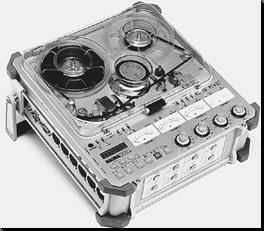
Nashville, TN. Nagra U.S.A. has announced availability of v2 software for the Nagra-D portable digital recorder. The key feature among numerous changes and added features in the new software is the option of three new high-frequency sample rate selections.

The Nagra-D can now record at 96 kHz, 88.2 kHz, and 64 kHz, in addition to the machine’s original sample rates at 48 kHz, 32 kHz, and 44.1 kHz.

Other new capabilities include mirror copy, sample-accurate sync between machines, absolute time display, time-code assemble recording, tape write protection, enhancements to the search mode, and an increase in the reel-numbering scheme from 9 to 999, with auto-incrementing of reel numbers during formatting.

The Nagra-D’s new high frequency sample rates can only function with external A/D convertors, and in 2-channel mode. The digital data density required by the high sample rate is achieved by combining digital tape tracks 1 and 2 as “left” and tracks 3 and 4 as “right.” When high sample rate is selected, the inputs automatically switch to AES digital (24-bit), and the unit’s four analog inputs are disabled. As well, the high sample rate modes can only be activated by connecting the Nagra-D to a PC running its optional NADCAM software and entering a special password from the PC.

In spite of these inconveniences, the high bandwidth upgrade appears to be a ground-breaking innovation that will delight many Nagra-D users, especially with the imminent arrival of the DVD disc format with its matching high bandwidth capabilities (the various proposals on the table for DVD-Audio format include 96 kHz and 88.2 kHz sample rates at 24-bit resolution).

The Nagra-D’s new sample sync capability allows two or more machines to be linked together in both record and playback modes for sample-accurate synchronization of the digital outputs. Machines to by synced are linked by a special cable, and time code from the master machine is sent to the slave machine for chase-lock synchronization in the usual manner.

The time-code assemble record mode is also a major new feature. When this mode is selected, the machine makes a precise time-code assemble at the record-in point. The machine accomplishes this by reading time code from tape during the pre-roll, then jamming the internal generator from tape code. The result is seamless, continuous time code on tape.

The v2 software’s mirror copy function allows an exact copy of a tape to be made on a second Nagra-D. The copy includes directory data as well as audio. Absolute time display allows the machine to show running time in hours, minutes and seconds from the start of the current reel, instead of the running time in the current take.

The Nagra-D’s search function has been improved with the new software. It can now search forward and backward at both 4-times and 8-times play speed, with audible cueing from the headphones outputs. Another new convenience feature is the ability to store a default power-up state that can be recalled from non-volatile memory after a loss of power or a memory reset.

The software update is supplied on three EPROM’s, though only the master CPU chip is required for machines without the time code option. The CPU is copy- protected and requires a password for activation. Depending on the options required, the cost of the upgrade to v2 ranges from $210.00 (US) to $600.00 (US). The higher price includes time code options and the high sample rate option.

Graphix Zone Launches CD-ROM Music Titles with Sunset Strip Party, Live WebCasts

Irvine, CA. Interactive music company Graphix Zone is launching three new Interactive Music CD-ROM’s™ today in a release party in Los Angeles. The three titles are Herbie Hancock Presents Living Jazz; Willie, The Life & Music of Willie Nelson; and Under The Covers.

The triple release party will be celebrated at the Billboard Live club on Sunset Strip, tonight (Sept.20) at 5:00pm PST (8:00pm EST). The event will include a national chat from 7:00pm to 8:00pm PST on America Online with celebrities including Herbie Hancock, The Doors’ Ray Manzarek and Under The Covers’ Henry Diltz and Gary Burden. From 5:00pm to 8:00pm PST Internet users are invited to access the cyber party live on the web at Billboard Live. The site will feature live audio and video from the party using Xing Technologies’ StreamWorks™ streaming.

The three titles will be available for both Windows and Macintosh platforms, in stores October 1, 1996. The discs present “a musical and visual adventure offering a feast for the eyes, music to the ears and the compelling aspect of interactive exploration and play.”

World Media Expo in October Will Likely Be the Last

New York, NY. The third World Media Expo next month in Los Angeles is expected to be the last, according to sources connected with the event. The two key sponsors have been unable to resolve differences over the management and direction of the show, and plan to hold separate events beginning next year.

The Radio-Television News Directors Association and the National Association of Broadcasters (NAB) Radio Show joined forces in 1994 with the aim of creating a bigger show that could lure larger exhibitors. While that goal was largely accomplished, NAB was apparently unhappy with the revenue distribution arrangement. NAB’s radio members also complained about sharing their show with other groups.

A formal announcement regarding the dissolution of the partnering agreement is expected before the beginning of World Media Expo on Oct. 9. Other organizations involved in staging the fall show are the Society of Broadcast Engineers, and the Society of Motion Picture and Television Engineers.